Table of Content
[Hide]
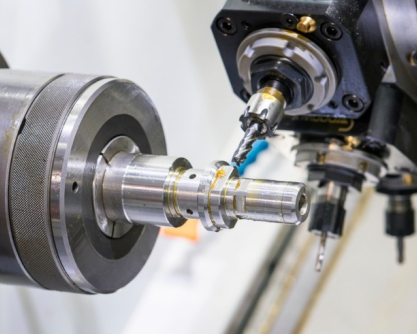
In the realm of manufacturing, precision is the name of the game. Nowhere is this more evident than in micro manufacturing, where the creation of tiny, intricate components is crucial for a wide range of industries, from electronics to healthcare. One technique that has revolutionized micro manufacturing is Precision Prototyping Machining. In this blog, we'll explore how this innovative method is making a big impact in the world of small parts.
Understanding Micro Manufacturing and Its Challenges
Micro manufacturing involves the production of extremely small parts and components, often with dimensions on the microscale (less than 1 millimeter). These machining small metal parts are used in various applications, from microelectronics and medical devices to aerospace and telecommunications. Achieving precision at such a small scale presents unique challenges that traditional manufacturing methods struggle to overcome.
The Role of Precision Prototyping Machining in Micro Manufacturing
Precision Prototyping Machining is an ideal solution for micro manufacturing for several reasons:
Exceptional Precision
The primary advantage of precision machining in micro manufacturing is its ability to achieve unparalleled precision. The method can produce components with tolerances measured in microns, ensuring that even the smallest of parts meet exacting specifications.
Material Versatility
Micro manufacturing often requires working with a diverse range of materials, from metals and ceramics to polymers and composites. Precision prototyping machining can handle these materials with ease, making it a versatile choice for various industries.
Complex Geometries
Manufactured by professional prototype manufacturing companies, micro components often have intricate and complex geometries. Machining can precisely create these intricate shapes with accuracy and consistency, a task that's difficult for many other manufacturing methods.
Scalability
While precision prototyping machining is widely used for prototyping, it's also a viable option for small to medium production runs. This scalability makes it cost-effective for manufacturers producing micro parts in larger quantities.
Applications of Precision Prototyping Machining in Micro Manufacturing
The applications of precision prototyping machining in micro manufacturing are extensive:
Microelectronics: Crafting tiny electronic components such as connectors, sensors, and microchips.
Medical Devices: Producing miniature medical implants, microfluidic devices, and surgical tools.
Telecommunications: Creating small connectors and components for communication systems.
Aerospace: Crafting intricate parts for space exploration and aviation.
Microfluidics: Developing lab-on-a-chip devices for scientific and medical research.
Precision Prototyping Machining is playing a vital role in micro manufacturing, enabling industries to create small parts with astonishing precision, versatility in material choices, intricate geometries, and scalability for production runs. As technology continues to advance, this method is poised to remain a cornerstone of micro manufacturing, providing the critical components that power modern technology and innovations in countless sectors. In the world of micro manufacturing, precision prototyping machining proves that small parts can indeed have a significant impact.
References
NEXTRipple MFG: Beyond 3D Printing: Exploring Precision Prototyping Machining
Related Prototyping Manufacturing Services News
- Automotive Ingenuity: Revolutionizing Vehicle Design with Prototype MachiningJanuary 5, 2024In the modern automotive industry, innovation and technology play an integral role in shaping the future of vehicles. One process that stands out amidst this evolution is prototype machining. With its...view
- What Is Precision Injection Molding?December 23, 2024Precision injection molding refers to an injection molding method where the dimensional repeatability of the molded products is very high, making it difficult to achieve the required standards using g...view
- Custom Prototype Manufacturing in ConstructionMarch 19, 2024In the construction industry, custom prototype manufacturing is a critical component to ensure a smooth project, and Ripple MFG stands out in the field of custom prototype manufacturing in const...view
- The Impact of Prototyping Machining Services in ArchitectureMarch 19, 2024With the advancement of science and technology, prototype machining services are increasingly used in the field of architecture, which has a profound impact on architectural design, construction and m...view
- Precise Tool and Manufacturing Technology: The Precise Force Driving Industrial ProgressSeptember 18, 2024The Importance of Precise Tool and Manufacturing TechnologyIn modern industry, the application of precise tool and manufacturing is becoming increasingly widespread. They are not only a symbol of tech...view
- Optimize Product Development Cycle with Custom Prototyping ServicesJune 14, 2024Molds are indispensable basic technological equipment in the manufacturing industry, primarily used for efficient mass production of various industrial product components and parts. They are widely ap...view
_20250123.webp "Reaction Injection Molding (RIM)")